
home lift type
Traction Home Lifts: A Guide to Cable-Driven Lifts
A traction home lift is moved by a motor that winds a rope, cable or drum.
In UK homes, almost all traction lifts are through-floor lifts: the car runs on its own rails through a hole cut in the ceiling, with no shaft.
Every one we checked serves two floors.
Get free home lift quotes
Answer a few questions about your home and get free quotes from installers covering your postcode.
Get free quotes- Free to use
- No obligation
- Installers covering your postcode
What are Traction Home Lifts?
A motor, usually in the roof of the car, winds a rope or drum that raises and lowers the car.
Stiltz calls its drive a “roped drum, braked gear motor drive”, and Lifton uses a wire rope hoist in the cabin roof.
Stiltz, Lifton, Stannah Uplifts, Companion and the Savaria Luma all use this kind of drive.
You may also see them called traction elevators or cable lifts.
Most rope-driven lifts sold for UK homes are through-floor lifts with published prices from £13,000. See how they compare with hydraulic, screw-drive and vacuum lifts in our home lift type comparison.
Hydraulic Lifts vs Traction Lifts
The other drive used in UK through-floor lifts is hydraulic, from Terry and Wessex.
Hydraulic lifts carry more, 250 to 325 kg against 170 to 255 kg, but need a dedicated electrical supply.
They are also slower. Most hydraulic models run at 0.06 m/s, so a 3 m climb takes about 50 seconds, against about 20 seconds for a Stiltz at 0.15 m/s.
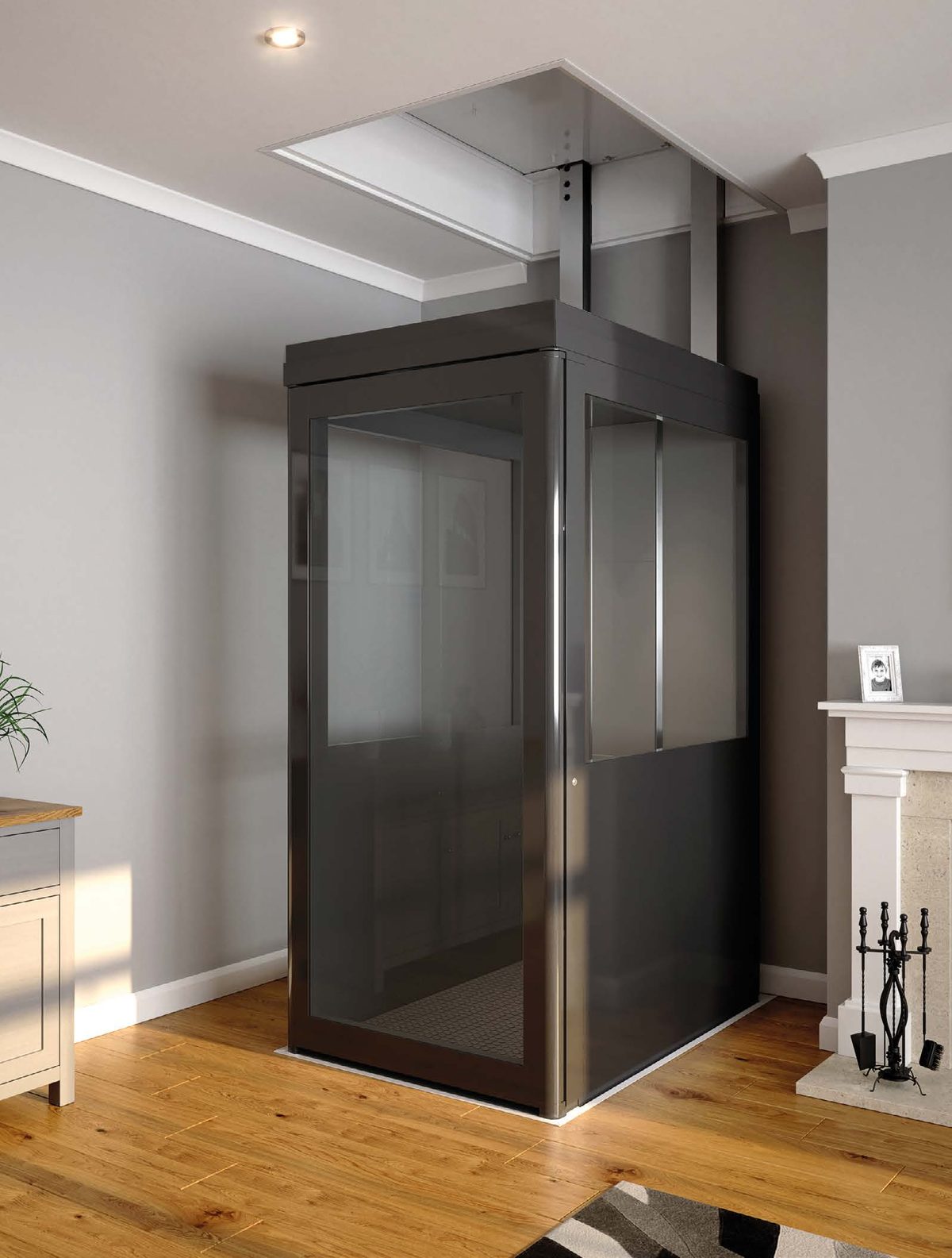
What a Rope-Driven Lift Offers
What a rope-driven through-floor lift offers:
- Safety: Battery lowering in a power cut, a safety pan under the car and a brake are common.
- Power supply: Six of the ten models we checked plug into a normal 13 A socket.
- Sizes: Most come in two sizes, a two-person car and a wheelchair car, with a choice of finishes.
- Price: Rope-driven through-floor lifts have the lowest published starting prices of any type, from £13,000 ex VAT to £19,995. Cable-driven shaft lifts, the product cost guides call “traction”, are a different and dearer lift: our installed band for those is £25,000–£55,000.
Is a Traction Lift Right for You?
If you need two floors, have a normal ceiling height and want a lift that plugs in, a rope-driven through-floor lift is usually the cheapest fit.
For three floors or more, look at screw-driven shaft lifts or vacuum lifts instead.
We don’t sell lifts. Ask for free quotes and we will pass your details to installers who fit them.
Top Homelifts
FAQ
Frequently Asked Questions about Traction Home Lifts
Answers to the questions we are asked most about traction lifts.
How does a traction home lift work?
A motor winds a rope, cable or drum attached to the car.
In UK home lifts the motor usually sits in the car roof, and the car climbs its own rails through an opening in the ceiling.
What are the benefits of a traction home lift?
Step-free access between two floors at the lowest published prices of any type.
Most models plug into a 13 A socket and need no shaft or pit.
How much space does a traction home lift With A Lift Car need?
It depends on the model.
Stiltz gives the Duo+ as 1,047 × 810 mm and asks for 2,370 mm of ceiling height upstairs.
None needs a motor room or a shaft. See our space guide for every model’s footprint.
Is a traction home lift safe?
Yes, when installed and serviced properly.
Common features are sensors under the car, an emergency stop, door interlocks and battery lowering in a power cut.
How much does a traction home lift cost?
Published starting prices for rope-driven through-floor lifts run from £13,000 ex VAT to £19,995.
Stiltz says from £17,000 ex VAT and Lifton from £18,000 plus VAT. Cost guides quote £28,000 and more for “traction”, which describes a different, shaft-built lift. That shaft-built lift is what the £25,000–£55,000 traction band in our price guide covers.
How is a traction home lift installed?
The installer surveys the house, cuts the opening in the ceiling and fits the rails and car.
Stiltz says fitting usually takes one to two days once the opening is ready.
Use the manufacturer or an approved installer, and get Building Regulations approval for the floor opening.
Price figures on this page last checked 12 October 2026 against our home lift price tracker, where every price is dated and linked to its source.